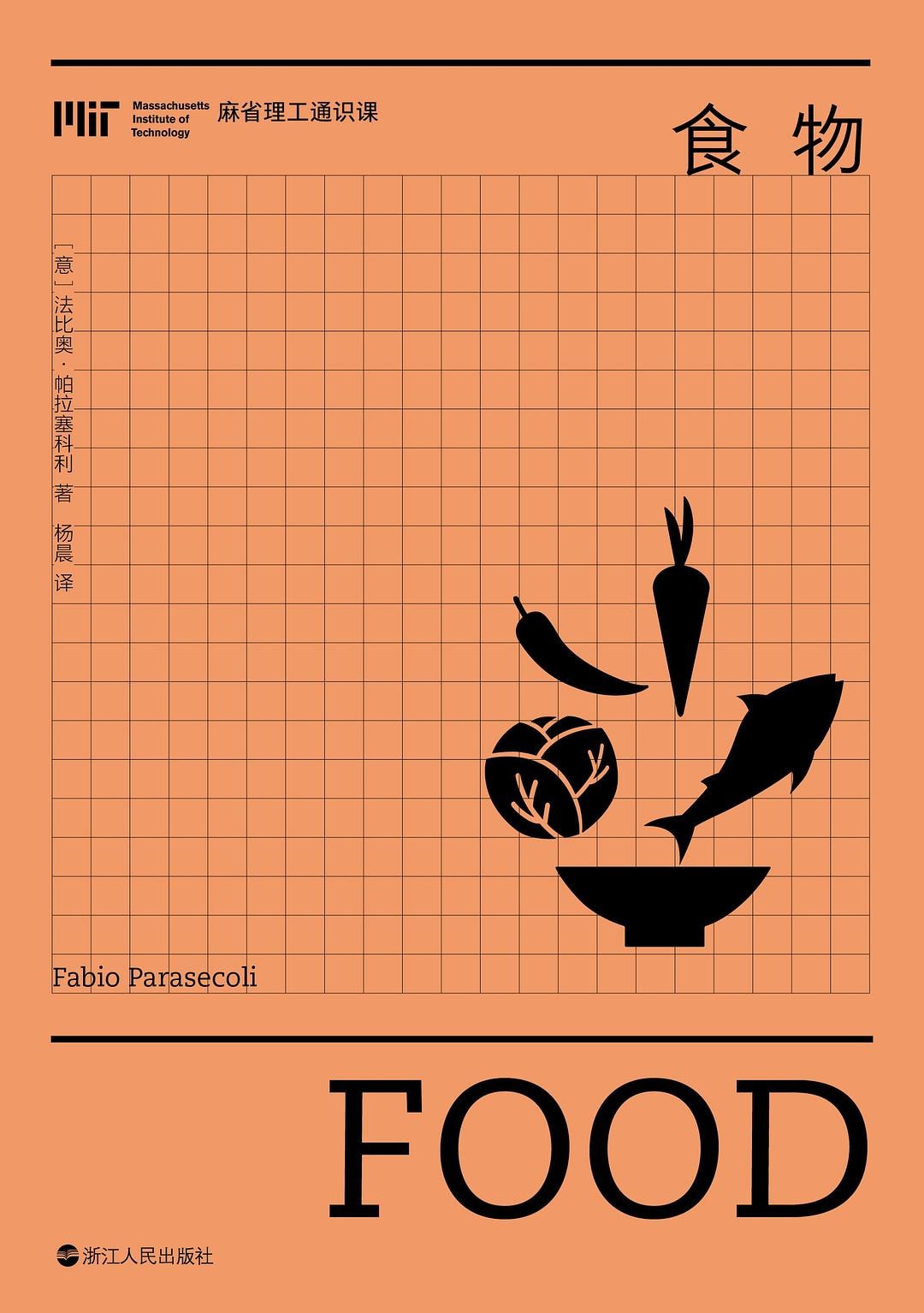
I recently started reading the Chinese edition of the MIT Press Essential Knowledge series. The first book I finished was Fabio Parasecoli’s Food. It was disappointing.
I hate finishing a book only to find that it has left almost nothing behind in my mind. Still, the experience gave me a useful question to think through: How can a book cover important subjects, contain few obvious errors, and yet produce so little value for the reader?
This problem is not limited to books. Courses, paid knowledge products, and many AI applications suffer from the same failure: they appear to provide an abundance of information, but after a substantial investment of time and attention, the user is left with little they can understand, judge, or use.
General knowledge should widen what we notice
Modern work rewards specialization. That is useful for making a living, but it can also confine a person to one set of concepts, methods, and concerns.
I began reading this series because I wanted to step outside the subjects I already knew. The purpose of general knowledge is not to turn someone into an instant expert in another field. It is to widen their field of attention.
Once ideas from previously separate disciplines are placed next to one another, different questions become visible. Potential opportunities often sit at those intersections, in connections a specialist would otherwise have little reason to notice.
Food is a promising subject for this kind of reading. Everyone eats, but most of us know little about how food is produced, processed, transported, priced, and sold—or how those activities connect to labor, business, environmental costs, and public policy.
What Food helps the reader see
The book is not worthless. Its coverage of the food system is broad.
Parasecoli does not treat food as a matter of taste and nutrition alone. He discusses supply networks, health, the environment, waste, technology, hunger, and food safety. A box of shrimp in a supermarket freezer may connect aquaculture, processing, cold storage, international shipping, retail, and regulation.
That perspective matters. It challenges the simple idea that what we eat is purely an individual choice. Price, income, available information, corporate behavior, and public policy all shape what eventually reaches a person’s shopping basket. The book also argues that we are not only consumers but citizens, and that changing the food system requires more than asking individuals to make morally superior purchases.
For a reader entirely new to food studies, the book offers a wide map of the territory. It identifies many of the relevant questions and shows that they are connected.
My dissatisfaction begins at exactly that point: the book increased the number of questions in view, but it did not improve my ability to work through them.
Widening the view is not enough
A work of general knowledge can help a reader at four levels: information, explanation, judgment, and action.
- It can provide new facts and identify where they come from.
- It can explain relationships between facts and help the reader form a workable model of the problem.
- It can offer ways to compare conflicting facts, goals, and values.
- When the subject is practical, it can clarify available actions and the responsibilities of different parties.
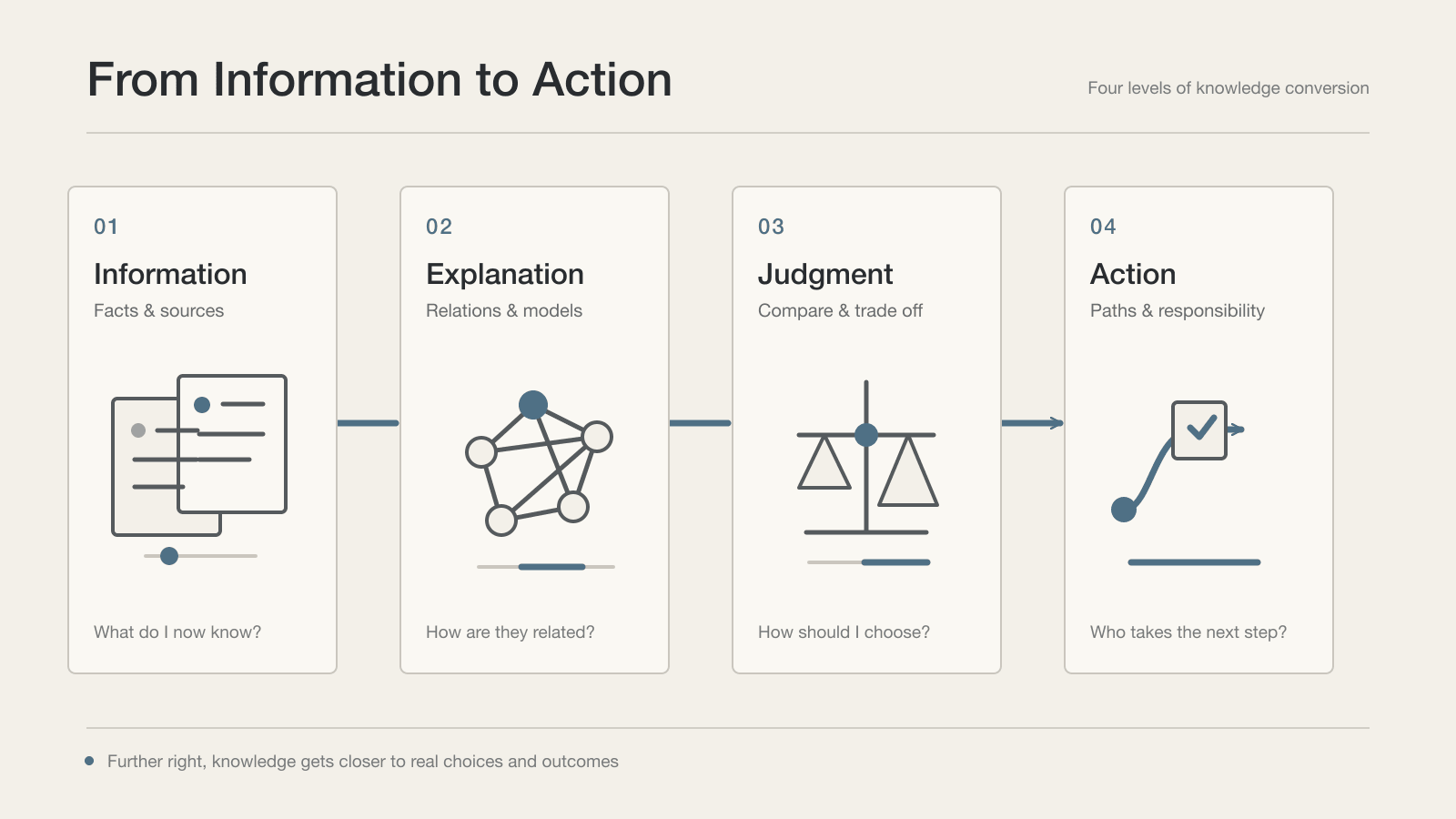
No book needs to accomplish all four. But Food presents itself as a guide to the food system for ordinary consumers, then moves from consumption to citizenship. Under that promise, merely listing concerns is not enough.
Consider the shrimp again. The book encourages consumers to ask where it came from. In practice, the packaging will reveal only limited information about origin and production. Who farmed and processed it? Under what labor conditions? What were the environmental costs of transport? How reliable was the oversight? The consumer usually cannot know.
The book tells readers what they should care about, but offers too little help in finding and evaluating the necessary information.
Even complete information would not settle the matter. Lower prices make food accessible to more people but may reduce producers’ income. Local food travels a shorter distance but is not automatically better for the environment. Higher labor and environmental standards also increase costs.
Health, price, sustainability, fairness, and local development all matter, but they cannot all be optimized in every decision. The book displays these conflicts without offering a sufficiently clear way to compare them.
Then comes action. The author wants consumers to become citizens. But what does that mean in practice? Which organizations can people join? How can they push companies to disclose information? Which problems can be left to market choice, and which require public policy?
If the information is unavailable, the criteria for judgment are unclear, and the path to action remains unspecified, “becoming a citizen” is little more than a commendable attitude. Companies and institutions have not completed their own responsibilities, yet consumers are asked to answer for the social consequences of every purchase.
The result is not greater consumer agency. It is an impossible moral burden.
“Correct but useless” is also a product problem
The same failure appears in products.
A book and a software application take different forms, but both promise some result in exchange for a user’s time and attention. A knowledge product should be able to explain whom it serves, what problem it addresses, and what changes after the user has finished with it.
Product teams often present the number of features they have built, the scenarios they cover, or the advanced technology they use. A team’s output is not the user’s gain. For knowledge products, chapter counts, course duration, document volume, and generated word counts are outputs too. The result is what the user can newly understand, judge, or do.
If a book, course, or AI product cannot say what it delivers, “rich content” may simply hide a failure to convert information into value.
This is a common problem in AI products. Large models are good at generating prose, summarizing documents, and organizing points. A product can therefore return an answer that is long, well structured, and broadly correct. But if it does not enter the user’s actual task—if it does not reduce cost, improve judgment, or help complete an action—the content remains only content.
The meaningful difference between AI products is not how much they can generate. It is whether they can turn generation into a result the user can actually use.
Not every book needs to be finished
Food also exposed another problem in my own reading. I finished it partly because of a simple belief: once I had opened a book, I ought to reach the final page.
Leaving a book halfway through can feel like a failure of patience, or as if it disqualifies the reader from having an opinion. The more time already invested, the harder it becomes to admit that the book is not a good fit. The same thing happens with a poor product experience: after paying or completing most of the process, a user becomes reluctant to leave.
The Chinese poet Tao Yuanming described himself as someone who loved reading without insisting on exhaustive understanding. A historical account of the strategist Zhuge Liang says that he read to grasp the broad outline. Neither treated line-by-line mastery or complete coverage as the only legitimate form of reading.
I do not take this as an argument for shallow reading or for abandoning every difficult book. It means that finishing a book is not the purpose of reading. Some books deserve close and repeated study. Some are useful for their structure and central claims. Others can be put down halfway through.
Books once carried high costs of writing, publishing, and distribution, so readers naturally treated them as filtered knowledge. AI and cheaper distribution have changed that assumption. Producing something that looks complete, polished, and book-like is no longer especially difficult. The form of a book no longer guarantees the quality of its contents.
Putting a book down does not necessarily mean that it is bad. It may not fit a reader’s current knowledge, questions, or stage of life. The same book may become useful five years later.
AI can also let reading extend beyond a book. A worthwhile question can lead to background research, counterarguments, competing interpretations, and original sources. The book becomes an entrance rather than the boundary of the inquiry.
I did finish Food, and the unpleasant experience eventually produced this essay. But the next time a book leaves me empty for page after page, I may simply close it. Perhaps it is the wrong book. Perhaps it is only the wrong time. Either way, starting it will no longer oblige me to reach the final page.